14 years in Prison to Justice Reform Rock Star - Louis L Reed
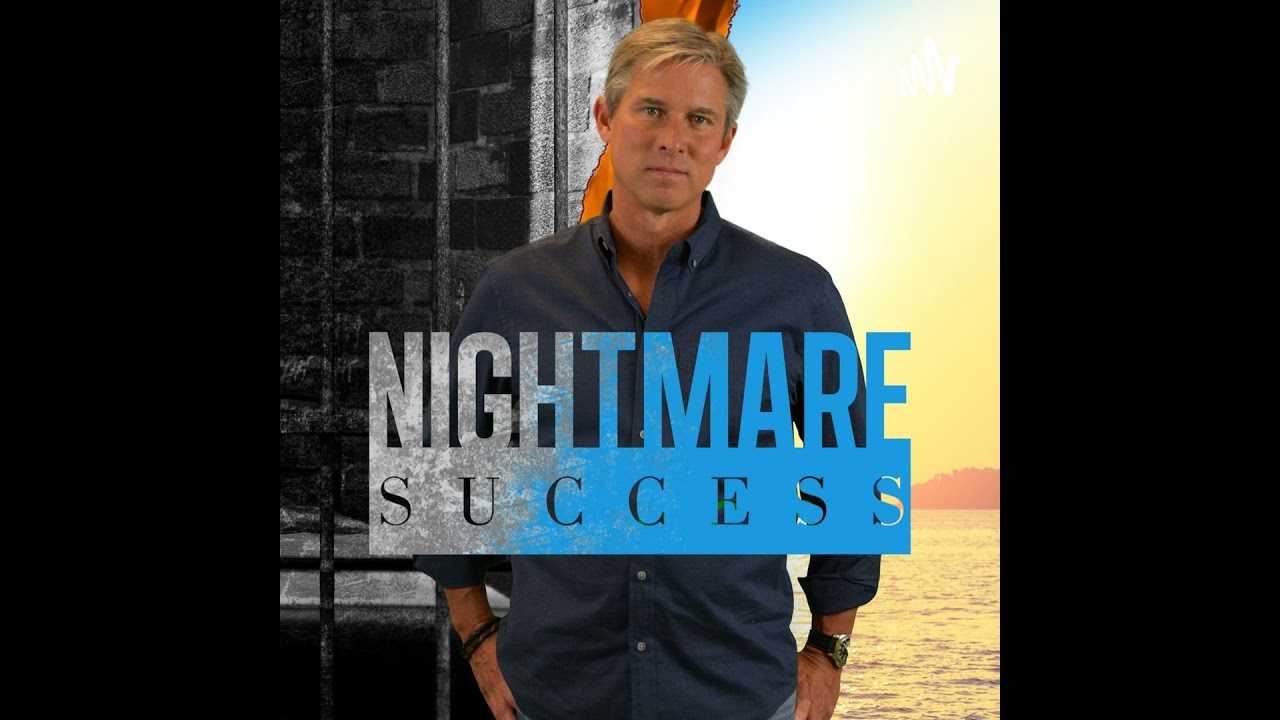
Louis L Reed shares a first-hand entrepreneurs story and practical lessons for people navigating legal pressure, incarceration, or reentry.
Key Takeaways
- Louis L Reed explains what triggered the legal and personal crisis.
- The episode shows how accountability and structure shape outcomes in entrepreneurs.
- Listeners get practical second-chance lessons they can apply immediately.
14 years in Prison to Justice Reform Rock Star - Louis L Reed
What happens when you’ve been dealt the worst hand imaginable, but you refuse to fold?
When I think about the guys in the justice reform movement who are actually making things happen, Louis L Reed is a rock star. Not in some hyperbolic sense. The man spent 14 years in federal prison, then came home and helped pass more than 30 state and federal bills. He led the grassroots movement that got the First Step Act across the finish line in 2018. That single piece of legislation has released more than 30,000 people from federal prison.
But what really got me was learning about where Louis started. This wasn’t a guy who made one bad decision and ended up in prison. This was a kid who never got a fair chance to begin with.
”What First Chance?”
Louis pushes back on the whole “second chance” narrative, and when you hear his story, you understand why.
“When you say a second chance, to me that means there was a first opportunity that I had,” Louis told me. “When you look at where I grew up, both my parents were incarcerated when I was 5 years old. They did federal prison time.”
Let that sink in. Five years old. Both parents gone.
His mother came home when he was around 10, but she returned to a world that had changed dramatically. Crack cocaine had hit the streets. His mother’s life became “diminished by a federal prison sentence” and then “also diminished by substance abuse.”
The trauma didn’t stop there. When Louis was 13, his sister was shot in the face by her boyfriend. She lost her eye. When Louis was 14, he himself was shot in the chest over a $3 crack deal. He had to relearn how to walk. The shooter was 25 years old. Louis was a kid.
When he was 15, a close friend was shot six times in the face and head, just seven feet away from where Louis was standing.
At 16, his cousin was murdered. Shot 32 times. In front of his own mother. Because he was dancing with some girl at a party whose boyfriend got jealous.
”You Can’t Enumerate Grace”
What strikes me about Louis is that he’s not bitter. He’s clear-eyed about what happened to him, but he’s also got perspective that most people never develop.
“You can’t enumerate grace,” he told me. “When we’re talking about a second chance, that’s coded to say that this person needs grace. You can’t quantify what is right. I’m certain that there are people listening to this who, if you look back over the last 24 hours of your life, there was a degree of grace that was probably immeasurable that you were in operation through. We all need grace.”
That’s not something you hear from a lot of people who’ve been through what Louis has been through.
The Drive-By That Changed Everything
At 21, Louis participated in a drive-by shooting. Someone had robbed him, and in the attempt to retaliate, he inadvertently shot a 5-year-old child. He was facing 80 years combined between state and federal charges. He ultimately got sentenced to 16 years federal.
Going in, Louis was what he calls “youthful arrogance.” He had never been in a controlled environment. He had issues with authority. For the first five years, his time was “topsy-turvy.” In and out of solitary confinement. Racketeering while incarcerated.
Then, around year six, something shifted.
The Two Conversations That Changed His Life
A guy doing 30 years, who served as the prison’s unofficial preacher, pulled Louis aside on the yard one day.
“How long are you going to keep wasting your potential?” the man asked. “I walk by you every day. I see you having a version of the same conversation with the same people, recycling the same stories. You’re anchored in your history and you’re not focused on your destiny.”
Around the same time, Louis had another conversation. This one with John Gotti Jr.
Louis had started walking the track counterclockwise. Gotti asked him why.
“I’m training myself to go against the grain,” Louis said.
Gotti started asking questions. How much money did you have when you came in? Who took it? The feds. Any properties? Who took them? The feds. Girlfriends? They left when the feds took everything else.
Then Gotti said something that stuck: “The one thing the feds can never take from you is an education.”
“It was one of those moments where the combination of that, this, and the third was a switch,” Louis told me. “There was a recalibration.”
He started walking toward education, toward growth, toward something different.
Coming Home to Conquer
When Louis got out, he didn’t ease back into society. He attacked it.
He started as a case manager in human services. Became the program manager for Connecticut’s largest permanent supportive housing program. Then he did something remarkable: he convinced the biggest city in Connecticut that they needed a government office for reentry affairs. He ran that office for two and a half years. The model got replicated in Kansas City, Los Angeles, Chicago, Detroit, and New York. He won an award from the US Conference of Mayors for best reentry practices.
Through Glenn Martin (who I had on the show a few weeks back), Louis connected with Van Jones and Jessica Jackson at Cut50. He became their national organizer and helped push the First Step Act across the finish line. That bill has created a pathway to freedom for more than 650,000 people affected by the criminal justice system.
He went on to serve as a senior executive at Reform Alliance, the organization co-founded by Jay-Z and Van Jones.
He’s consulted with the White House, the Department of Justice, Fortune 100 corporations. He produced Hulu’s “Unprisoned” series. He wrote “Nine Steps: The Fall Up When You Trip Down.”
The Part Nobody Talks About
But here’s where Louis got real with me in a way he said he’d never shared publicly before.
All that success? He never maximized the moment. He went from thing to thing to thing. That impostor syndrome, that fear of not measuring up, it never went away.
Then his father was assaulted and murdered in 2021. His sister died exactly one year later from coronavirus complications. He lost a child. Everything came crashing down.
“My heart felt like I could not lift the weight off of me,” Louis said. He checked himself into a residential mental health facility.
While there, he realized something profound. He wasn’t just grieving his father. He wasn’t just grieving his sister or the loss of his mother when he was five or getting shot at 14. He was grieving the loss of his freedom. He had never properly processed 14 years of incarceration because the moment he got home, it was go, go, go. All the time.
What Good Things Grow in the Dark
Louis shared something from a recent sermon that stuck with me. “There are good things that grow in the dark,” he said. “Darkness is a precursor for light. In the beginning there was darkness, and God spoke, and then there was light. Even birth. We’re in a state of darkness in the womb before we pass through the birth canal and experience light.”
While Louis was in the darkness of a federal prison cell, he was working on what that light was going to look like. Working on his education. His emotional intelligence. His social IQ. Looking for that pinhole of light.
“The closer I began to walk towards that pinhole of light, it got larger and larger,” he told me. “What people are seeing on this side of life, on this side of society, is an effect of maturation of what was already cooking in the oven on the other side.”
The Takeaway
I asked Louis, with everything he’s accomplished and everything he’s been through, what’s his biggest takeaway?
“God’s grace is sufficient,” he said. “God’s strength has been made absolutely perfect in my weakness. The times in my life where I couldn’t press through, when I couldn’t get up, when I just wanted to lay down, it was God’s strength.”
He referenced the Footprints poem. Two sets of footprints during the good times. One set during the hard times. Not because God abandoned him, but because God was carrying him.
Louis L Reed is living proof that where you start doesn’t have to determine where you end up. But he’s also proof that success doesn’t make the trauma disappear. You still have to do the work.
Hear the full conversation:
Key Takeaways
- Louis L Reed explains what triggered the legal and personal crisis.
- The episode shows how accountability and structure shape outcomes in entrepreneurs.
- Listeners get practical second-chance lessons they can apply immediately.


