The Journey of Brad Rouse: From Stage to Storytelling
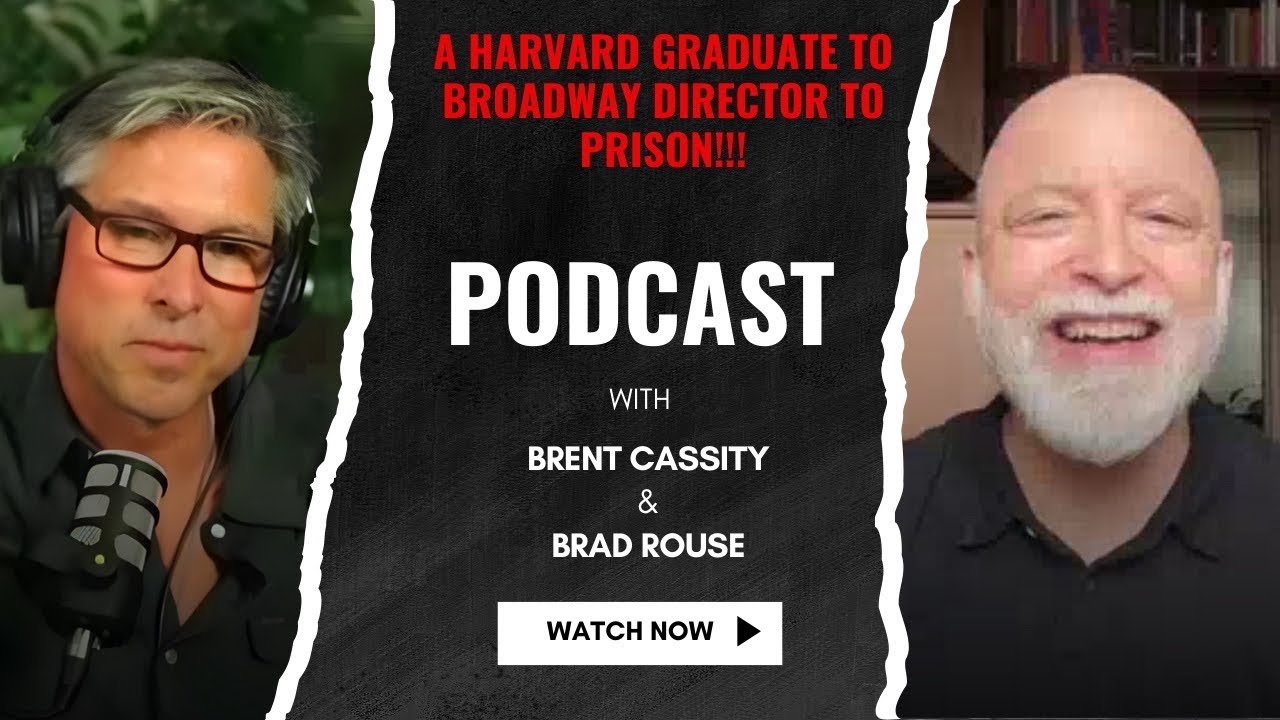
From Stage to Storytelling shares a first-hand athletes story and practical lessons for people navigating legal pressure, incarceration, or reentry.
Key Takeaways
- From Stage to Storytelling explains what triggered the legal and personal crisis.
- The episode shows how accountability and structure shape outcomes in athletes.
- Listeners get practical second-chance lessons they can apply immediately.
The Journey of Brad Rouse: From Stage to Storytelling
Sometimes the most beautiful second acts come from the deepest falls—and Brad Rouse’s journey from Broadway stages to federal prison to helping others rewrite their stories proves that rock bottom can be the foundation for something extraordinary.
I just finished talking with Brad Rouse, and I’m still processing everything this man has been through. Here’s a guy who went from directing on Broadway, working with legends like Hal Prince, to getting his door kicked in by federal agents—all in the span of a few years. But what happened next? That’s where the real story begins.
From Harvard Stages to Greenwich Village Raids
Brad’s early life reads like something out of a movie. Growing up in my old stomping grounds of St. Louis, he made it to Harvard, won awards for artistic achievement, and landed in New York working for Broadway legend Hal Prince. For ten years, he was living the dream—directing world premieres, working on shows by Stephen Sondheim and Andrew Lloyd Webber.
But when that structure disappeared and Hal’s office downsized, Brad made what he calls “a very bad decision.” At 34, having never really used drugs, he dove headfirst into addiction. Within 14 months, federal agents were breaking down his Greenwich Village apartment door.
“I had this thick Russian accent, he’s like ‘Bradley, life is over,’” Brad told me, describing the DEA agent who seemed to be having the time of his life during the arrest. They found 61 grams of methamphetamine, and just like that, Brad’s world collapsed.
120 Men, One Room, No Windows at MDC Brooklyn
What happened next was a year at MDC Brooklyn—a place that strips you down to nothing. Brad found himself in a single room with 120 other men, no outside air, no yard. The guy who had been directing Broadway shows was now sleeping on a bunk, trying to figure out how to survive.
The adaptation wasn’t easy. “It took me a few months because, you know, I’m coming down off a meth addiction plus benzos and I had a concussion, so my brain function was in horrible shape,” he shared. But slowly, Brad learned one of the most important lessons of his life: “Maybe I should be watching the people who seem to have adapted well.”
He found his routine—waking early, exercising, writing, reading. He even helped some Nigerian guys understand Macbeth so they could take their girlfriends to see it when they got out. In the midst of one of the harshest federal facilities, Brad was still finding ways to teach and connect through storytelling.
From Resentment to Redemption Through LinkedIn
Here’s where Brad’s story takes an unexpected turn. After getting out, he spiraled for years—angry, resentful, drinking to numb the trauma. His theater world had largely abandoned him. “I was dead to them,” he said simply. “I no longer had any professional juice.”
But then something clicked. He got sober and did something that changed everything: he went on LinkedIn and started connecting with people in the justice field. That’s how he found Michael Santos and White Collar Advice—and discovered his true calling.
“It came at just the right moment because I had no theater work in front of me, no gigs, no offers, nothing on the calendar,” Brad explained. For the past seven years, he’s been helping people craft their narratives for sentencing, using all those directing and storytelling skills he’d honed on Broadway.
The work is intense—he’s often talking to people on the worst days of their lives. But watching them come back to life? “It just makes me feel like anybody can adapt to anything,” he told me. “I feel at the height of my powers artistically, intellectually, spiritually, physically. I’ve never felt better, but I could never have gotten here without all the people I’ve met along the way and all the pain I had to suffer in my lowest moments.”
Key Takeaways
- From Stage to Storytelling explains what triggered the legal and personal crisis.
- The episode shows how accountability and structure shape outcomes in athletes.
- Listeners get practical second-chance lessons they can apply immediately.