National Company: Justin Paperny's Journey from Privilege to Purpose
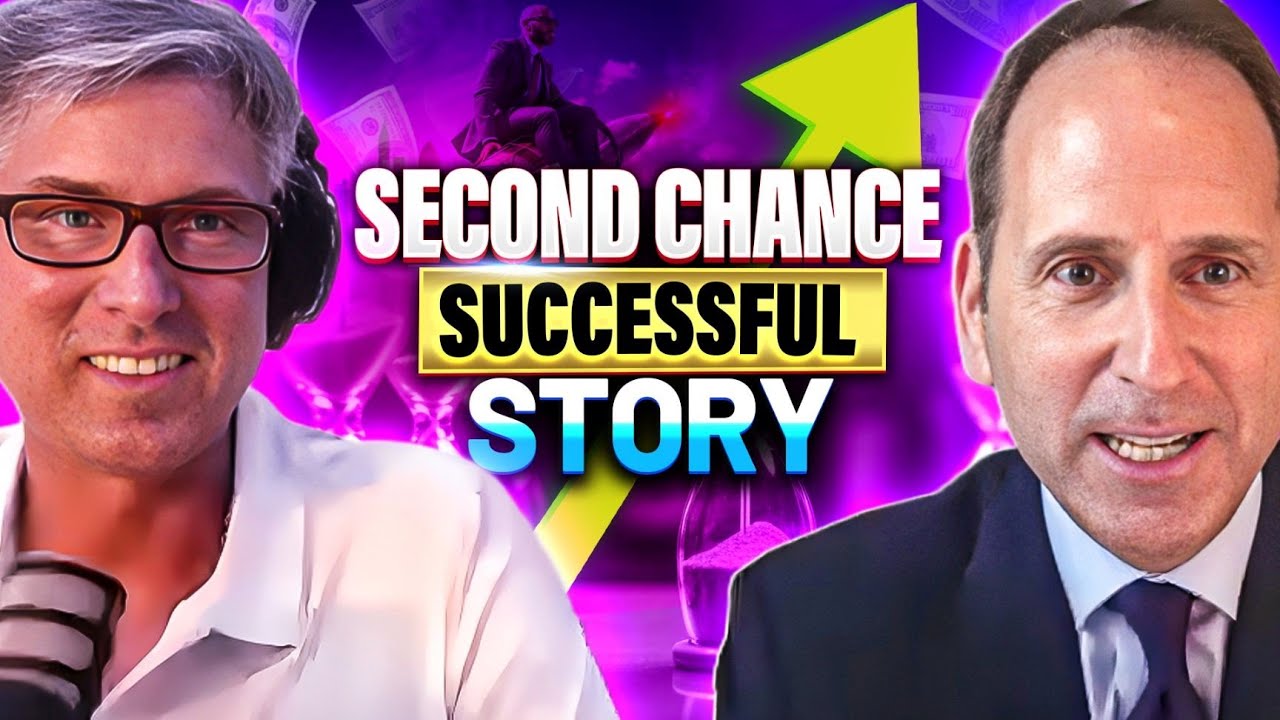
Justin Paperny shares a first-hand athletes story and practical lessons for people navigating legal pressure, incarceration, or reentry.
Key Takeaways
- Justin Paperny explains what triggered the legal and personal crisis.
- The episode shows how accountability and structure shape outcomes in athletes.
- Listeners get practical second-chance lessons they can apply immediately.
National Company: Justin Paperny’s Journey from Privilege to Purpose
“There’s a difference between identifying your values and actually living faithfully to them.”
Justin Paperny had every break in the world. Great parents who taught him right from wrong. A disciplined childhood playing baseball. He made the USC team and played in the 1995 College World Series national championship. At 26, he became the youngest broker hired by Bear Stearns. He was managing over $250 million in assets.
Then he made choices that landed him in federal prison for 18 months.
Today Justin runs White Collar Advice, a company that helps people navigate government investigations, sentencing, and prison preparation. He’s been featured on Dr. Phil, ABC News, NBC, Forbes, and Fox News. He speaks at the FBI Academy. He’s turned his worst failure into his greatest asset.
The Fraud Triangle
Justin grew up with privilege and zero adversity. “The only downside perhaps of being raised so well is when adversity struck, I didn’t know how to respond,” he told me.
He was always the guy who performed like the people around him. Put him in AP classes, he got A’s. Put him with guys who cut corners, he cut corners.
When he moved to the brokerage world at Bear Stearns and then UBS, he found himself around people who were out for themselves. Partnerships failed over money. Senior brokers leveraged junior brokers. Nobody seemed to care about the team.
His partnership brought in a hedge fund client with six million dollars under management. The guy could generate $100,000 a month in production. Problem was, he lost that six million. Then lost another six million.
“Our intellect and experience told us clearly he’s only raising money by lying to people,” Justin admitted. “But we kind of turned the other way for money. We schemed with management at UBS to protect ourselves.”
It all crashed in December 2004 when investors wanted their money back and there wasn’t any.
Responding Poorly
Justin’s first instinct was to lie. When the FBI questioned him, he wasn’t prepared. He made statements that contradicted their evidence.
“Had I told the truth when they questioned me, there’s a chance they wouldn’t have referred me for prosecution,” Justin said. The FBI agent who arrested him, Paul Bertrand, later became a friend and told him exactly that.
“I was a dream for a lawyer because I would scratch a check, waste money and time. Never gave them a chance to help me effectively.”
His lawyers eventually got through to him. He was looking at five years. His co-defendant, more culpable but cooperating, would get two. Justin learned about the twisted nature of a system that rewards cooperation over honesty about guilt.
He was sentenced to 18 months at Taft Federal Prison Camp.
Prison and Michael Santos
Walking into prison, Justin was struck by something strange: people were smiling.
“What the hell is wrong with so many of these dudes? This guy’s gardening over here, looks like he’s having the time of his life. This guy’s eating ice cream.”
A few weeks later, he was walking the track and smiling too.
But he wasted time at first. He fixated on exercise, no different from guys watching TV all day. Then Michael Santos, his now-business partner who served 26 years in federal prison, asked him a simple question: “On a scale of 1 to 10, how would you rate your preparations for going home?”
Justin had to be honest. Other than exercise, he was wasting his time.
Michael helped him understand that some guys are nervous to go home because they have nothing waiting for them. They haven’t built anything. Some would rather catch another charge near the door than face freedom unprepared.
From then on, Justin woke at 3 and 4 AM writing. He started a blog from prison that got hundreds of letters a month. He self-published his book, Lessons from Prison, a week before release.
“Time began to go too fast,” he said. “I was like, I need more time to get this done.”
Building White Collar Advice
When Justin came home, he cold-called and cold-walked into professors’ offices with his book, asking for an hour of their business ethics class. You’d be surprised how many said yes.
Speaking led to consulting. Consulting led to a real business.
Now White Collar Advice gets about 1,000 new leads a month. Justin runs weekly webinars every Thursday covering everything from pre-sentencing reports to restitution to the First Step Act. It’s all free.
He’s spoken at the FBI Academy multiple times. The same agency that arrested him now invites him to help agents understand how to get the truth out of defendants.
“They treated me like an equal,” Justin said. “They said, ‘This is Justin. He used his time productively and wisely. He’s going to help you do your job better.’”
The Takeaway
Justin’s biggest lesson cuts to the core of who we want to be:
“There’s a difference between saying your values and living faithfully to them. It’s one thing to say what we’re going to do when we come home. It’s another thing to actually do it. That daily, deliberate grind, working on days where nobody cares, nobody calls. That’s where it matters.”
He emphasizes that underdog status is real. If you go toe-to-toe with someone who’s not a felon, you probably lose. You have to think creatively. Own your story rather than running from it.
“Take the ammunition that people may have against you and acknowledge if it’s true. I only served one year in a security camp. That’s true. If the measure is how long someone served to help you, I’m not the guy. My partner did 26 years. So you just learn to use that and not run from it.”
Justin’s book Lessons from Prison is available free at WhiteCollarAdvice.com. His weekly Thursday webinars at 10 AM Pacific are open to everyone navigating the system.
Key Takeaways
- Justin Paperny explains what triggered the legal and personal crisis.
- The episode shows how accountability and structure shape outcomes in athletes.
- Listeners get practical second-chance lessons they can apply immediately.


