Carlos Watson: The Visionary Entrepreneur Railroaded by Injustice
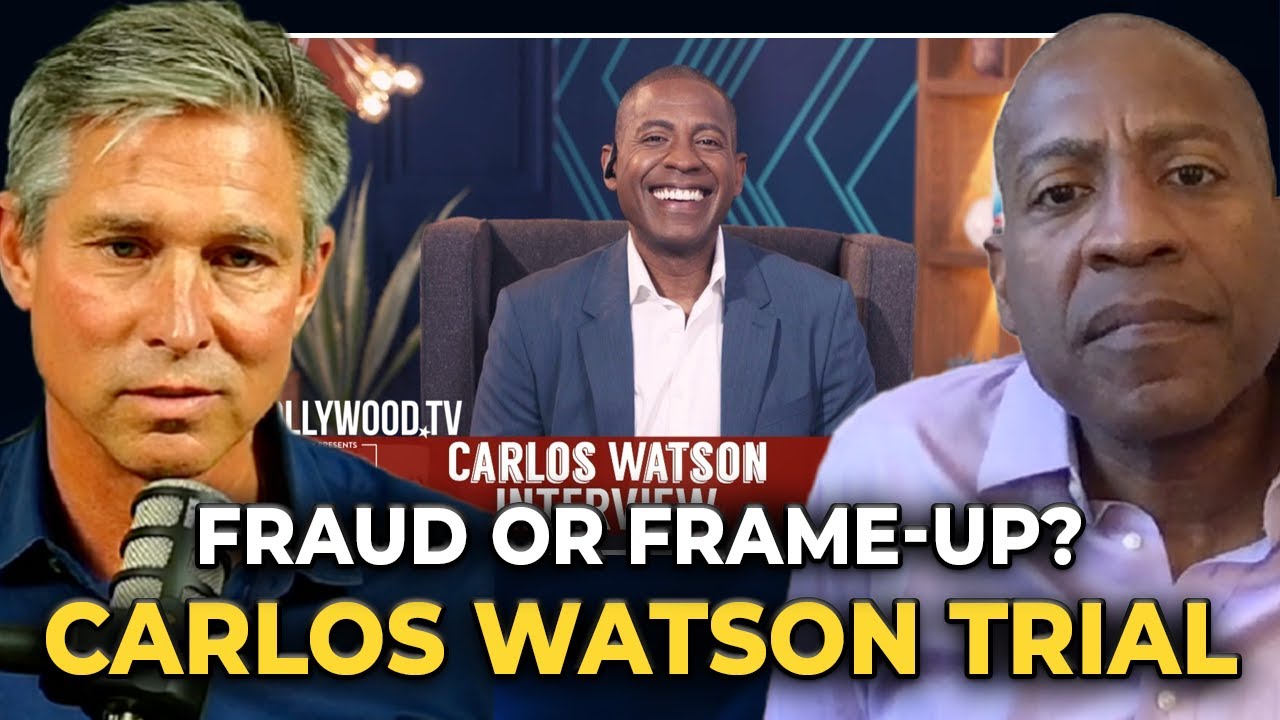
The Visionary Entrepreneur Railroaded by Injustice shares a first-hand entrepreneurs story and practical lessons for people navigating legal pressure, incarceration, or reentry.
Key Takeaways
- The Visionary Entrepreneur Railroaded by Injustice explains what triggered the legal and personal crisis.
- The episode shows how accountability and structure shape outcomes in entrepreneurs.
- Listeners get practical second-chance lessons they can apply immediately.
Carlos Watson: The Visionary Entrepreneur Railroaded by Injustice
What happens when a Harvard-educated media mogul goes from building a billion-dollar company at his mother’s kitchen table to facing 37 years in federal prison for crimes he says he didn’t commit?
When I sat down with Carlos Watson, the co-founder and CEO of Ozy Media, I expected to hear another entrepreneurial success story. What I got instead was a front-row seat to one of the most shocking examples of how our justice system can be weaponized against innocent people. Carlos isn’t just fighting for his freedom, he’s fighting for his life, with sentencing set for December 13th.
From Kicked Out of Kindergarten to Harvard Honors
Carlos’s journey started in Miami, the son of two teachers who instilled an unshakeable optimism despite facing real hardships. “I mean the name of the podcast is nightmare success so I guess you know things have gone left when kindergarten stories are in your Wikipedia,” Carlos told me with his characteristic wit, referencing how he was actually expelled from kindergarten as a child.
But this early stumble became the foundation for everything that followed. After a devastating car accident at 11 left him unable to walk for three years, Carlos learned resilience from his 102-year-old grandmother who would say “when hard things get hard, hard people get harder.” That mindset carried him through Harvard, where he excelled academically, and then to Stanford Law School, where he became editor of the law review and student government president.
Rather than follow the traditional legal path, Carlos chose entrepreneurship, co-founding Achievement First Academy (later acquired by Kaplan) to help underserved students navigate the college admissions process. The company worked in 75 school districts across 22 states, serving 100,000 students annually.
The Kitchen Table That Launched a Media Empire
In 2012, when Carlos’s mother Rose was battling late-stage cancer, she refused to let her son waste away in hospital waiting rooms. “She said you know I feel like you’re just too young to be at doctor’s offices all day every day I want to get you busy and when my mom said that she didn’t mean you we’re going to think about it we’re going to take time she meant nope on the way home from the hospital we’re going to go by Office Depot we’re going to get a whiteboard.”
That whiteboard session birthed Ozy Media, a company dedicated to covering “the new and the next”, profiling rising stars before they became household names. They featured Trevor Noah before he hosted The Daily Show, AOC before she was a congresswoman, and Jason Tatum while he was still in high school. The company grew from newsletters to TV shows on PBS and BBC, podcasts, and festivals in Central Park.
The numbers were staggering: by 2019, BuzzFeed wanted to acquire Ozy for $300 million. By 2021, JP Morgan valued the company at $2 billion. “From 2019 to 2021 Brent I will tell you it only got better and so we went from a company that BuzzFeed wanted to buy for 300 million to company that JP Morgan thought was worth two billion and 3 months later we did yet another deal which of course they wouldn’t have done if they fundamentally thought a crime had been committed.”
When the Tidal Wave Hit
The destruction began when Ben Smith, the former BuzzFeed editor who had tried unsuccessfully to acquire Ozy, joined The New York Times and began writing what Carlos calls hit pieces about the company. Smith never disclosed his financial conflict of interest, millions in BuzzFeed stock options that would have benefited from Ozy’s downfall.
The catalyst was a single incident: Carlos’s co-founder and COO Samir Rao had impersonated a YouTube executive on a reference call with Goldman Sachs. Rao immediately confessed in detailed, six-page letters written with his family and lawyers, taking full responsibility and apologizing to Carlos for his actions. Goldman was upset but continued working with Ozy, completing additional deals months later.
But Smith spun this isolated incident into a narrative that Ozy was entirely fraudulent, a “house of cards.” The DOJ took the bait, indicting Carlos not in California where his company operated, but in Brooklyn, where Smith lived blocks from the prosecutors. In a jaw-dropping abuse of the system, they offered Rao a 5K letter, essentially immunity in exchange for testimony against Carlos, transforming his confession of sole responsibility into accusations against his former boss.
The statistics Carlos shared chilled me: the DOJ wins 99.6% of their cases. Of 72,000 people prosecuted annually, fewer than 300 go home free. Carlos faced a jury with seven white men and zero Black men, in Brooklyn. The fix was in from the start.
Carlos Watson’s story isn’t just about one man’s fight for justice, it’s a wake-up call about a system that has lost its way. As he faces potential decades behind bars for crimes even the government’s own forensic accountant says he didn’t commit, we’re witnessing what happens when prosecutorial power goes unchecked.
Key Takeaways
- The Visionary Entrepreneur Railroaded by Injustice explains what triggered the legal and personal crisis.
- The episode shows how accountability and structure shape outcomes in entrepreneurs.
- Listeners get practical second-chance lessons they can apply immediately.


