Discovering Identity: The Journey of Danny Collins

The Journey of Danny Collins shares a first-hand athletes story and practical lessons for people navigating legal pressure, incarceration, or reentry.
Key Takeaways
- The Journey of Danny Collins explains what triggered the legal and personal crisis.
- The episode shows how accountability and structure shape outcomes in athletes.
- Listeners get practical second-chance lessons they can apply immediately.
Discovering Identity: The Journey of Danny Collins
What do you do when you discover at nine years old that the woman you’ve been calling “mom” isn’t actually your mother – and everyone around you has been living this lie?
Danny Collins went from having a signing bonus with the Atlanta Braves to serving over seven years in prison, but his story isn’t really about baseball or addiction. It’s about a kid who never learned how to process the deepest kind of pain – abandonment – and how that unresolved trauma became the gateway to everything that followed.
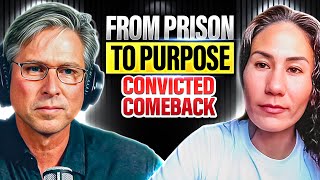
When Danny sat across from me on Nightmare Success, I was struck by how he could talk about nearly drowning in a high-speed chase with the same matter-of-fact tone most people use to describe their commute. That’s what happens when you’ve lived through hell – you become desensitized to your own story. But Danny’s journey from that confused kid in Fort Pierce, Florida to where he is today working with Containing Luxury, building tiny homes out of shipping containers for justice-impacted individuals, is nothing short of remarkable.
The Driveway Discovery That Changed Everything
Danny’s childhood sounds like something out of a psychological thriller. At five or six years old, he’s playing basketball in his driveway when two girls ride by on bikes. One of them casually points and says, “Daniel, that’s your sister Rebecca.” Then they just keep riding.
“I was young, so I didn’t really think a whole lot of it,” Danny told me. “But I ran inside and continued on with my life. In my house, there wasn’t a whole lot of communication, affection, or emotion. My parents never said ‘I love you.’”
A few years later, at school, Rebecca approached him directly: “Daniel, you don’t know me. My name is Rebecca and I’m your sister.” Danny’s response? He ran the opposite direction.
The truth finally hit when he was nine and had to bring his birth certificate to Little League to verify his age. The name on that document wasn’t the woman he’d been calling mom his entire life. But instead of getting answers, Danny started acting out – and his family’s response was more rules, more discipline, more silence about the elephant in the room.
From Atlanta Braves Prospect to Rock Bottom in a Florida Canal
Baseball became Danny’s escape and his identity. He told his Little League coach he was going to play professional baseball for the Braves specifically – “maybe then my mom would want me.” And incredibly, that dream came true. After a stellar sophomore year in college, including throwing the only no-hitter in school history, the Braves drafted him.
But success and money without addressing the underlying trauma is a dangerous combination. Danny started hanging out with drug dealers, driving two hours from spring training to Fort Pierce at midnight to get cocaine, then driving back to be at practice at 7 AM. The predictable spiral followed: suspensions, release from the team, homelessness, and eventually that terrifying high-speed chase that nearly killed him.
“I hit the water, my head hits the windshield, I started panicking,” Danny recalled about his truck plunging into Taylor Creek Canal. “There’s a bunch of water coming in the truck. I can’t get the doors open, can’t get the windows open. The truck starts sinking.”
What happened next still gives me chills. Danny swears someone pulled him through the back hatch of his sinking truck, though the police insist they never touched the vehicle. He blacked out on the canal bank and woke up the next day covered in blood, lucky to be alive.
Prison, Gangs, and the System That Fails
That crash led to Danny’s first prison sentence – 52.6 months followed by house arrest. But here’s what struck me most about our conversation: prison did absolutely nothing to address the root causes of his behavior. It was just a timeout from society.
“The first time wasn’t so bad,” Danny explained. “But the second time I got caught up in the subculture of prison. I was actively using, ended up joining a gang – a white supremacist organization of all things.”
This is where Danny’s story gets really uncomfortable, and I appreciate his honesty about it. He became deeply racist, influenced by the tribal politics of prison during the height of the Trump-Black Lives Matter tensions. He came out covered in tattoos, institutionalized, and more damaged than when he went in.
“I became institutionalized,” he said. “Prison did nothing to rehabilitate me at all. When I came home, I was not preparing myself. I was a mess all the way to the time I left.”
Mental Health Court: The Game Changer
Here’s where Danny’s story takes a turn that every person working in criminal justice reform needs to hear. After another relapse and arrest – this time at his parents’ house where they’d called police hoping to get him help – Danny faced 15 years. But his wife paid $23,000 for a lawyer who got him into Florida’s mental health court program.
This is what saved Danny’s life.
“Mental health court absolutely changed my life,” he told me with genuine emotion in his voice. “It gave me access to therapy. I was able to deal with all the childhood trauma from growing up not knowing who my biological mother was. I was able to deal with the fact that my whole identity was professional baseball, and I didn’t know what to do with my life after that.”
The program provided what the prison system never had: a case manager, psychiatrist, therapist, peer specialists, and regular court check-ins. For the first time in Danny’s life, someone was treating the trauma instead of just punishing the symptoms.
“I had access to people who helped me start to treat the trauma I had as a child that I never had processed,” he said. “I didn’t know how to articulate what I was feeling. I knew I didn’t feel right, but I couldn’t describe it because I grew up in a house where we didn’t talk about anything.”
Building Something Better with Containing Luxury
Today, Danny works as Director of Sales for Containing Luxury, a company that transforms shipping containers into affordable tiny homes. But this isn’t just a job for him – it’s a mission that connects directly to his lived experience.
They’re working with nonprofits to provide housing for justice-impacted individuals and veterans. Danny knows what it’s like to be homeless, to come out of prison with nowhere to go, to be denied housing and employment because of his record.
“Ninety-five percent of people in prison will come out one day and return to the same communities,” he pointed out. “What do we want these people to be when they come out – better neighbors or better criminals? If we don’t give people access to resources and the ability to change their lives, we’re creating a less safe society.”
His boss saw something in Danny that traditional employers missed. Instead of focusing on his criminal record, he recognized his ability to connect with people, his sales skills, and his growing social media presence. Now Danny has over 142,000 TikTok followers where he shares his story with raw vulnerability, helping others who feel trapped by their circumstances.
Danny’s story proves something I believe deeply: we’re not dealing with bad people who need to become good – we’re dealing with hurt people who need to heal. When we treat addiction and crime as public health issues instead of moral failings, when we provide trauma-informed treatment instead of just punishment, people can transform their lives in ways that benefit all of us.
The kid who couldn’t process his mother’s abandonment became a man who’s helping build homes for people society has abandoned. That’s not just redemption – that’s wisdom earned through pain and applied with purpose.
Key Takeaways
- The Journey of Danny Collins explains what triggered the legal and personal crisis.
- The episode shows how accountability and structure shape outcomes in athletes.
- Listeners get practical second-chance lessons they can apply immediately.