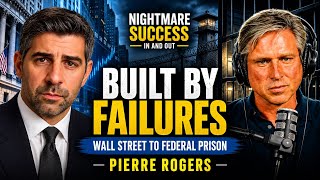
Dean Vagnozzi Had $80 After the Par Funding Case Hit
Dean Vagnozzi shares a first-hand white collar crime story and practical lessons for people navigating legal pressure, incarceration, or reentry.
Key Takeaways
- A court-appointed receiver took control of Dean Vagnozzi's 17-year financial firm in 2020 as part of the Par Funding SEC civil case.
- Vagnozzi says his bank accounts were frozen and he had $80 in his pocket when the case hit.
- After the shutdown, he delivered DoorDash orders and ran a FedEx Ground operation while relying on his wife, Christa, and their four children.
The Day the Receiver Walked In
Dean Vagnozzi remembers the moment his 17-year financial business stopped being his. A lawyer from a Philadelphia firm arrived with a court order and a copy of the SEC lawsuit against him. Vagnozzi says the message was blunt: “Mr. Vagnozzi, your company is now in our possession. Gather your employees. The government has sued you. We have an order to take control of your company.” He was told to collect his personal belongings and leave.
The case was tied to Par Funding, and Vagnozzi says he was deceived by Par while the government badly overstated its claims against him. The SEC civil case froze his accounts and put his firm into receivership. Brent Cassity framed the scale of the collapse this way: Vagnozzi had been successful, then “in a matter of hours” his life changed. Vagnozzi says he had $80 in his pocket when it happened.
Built by Work, Not Comfort
Vagnozzi grew up in Collegeville, Pennsylvania, about 20 miles northwest of Philadelphia. His father was a police officer who went to night school in his mid-30s, earned a college degree, and then attended law school at night. His mother worked catering jobs at three or four hotels to help pay bills. “I saw my parents work their tails off,” Vagnozzi told Brent.
He was the youngest of three children and says work was the family language. At Albright College in Reading, Pennsylvania, he played Division III football as a fullback and punter. One of his teammates was future Pennsylvania senator John Fetterman, who played on the offensive line. There were no athletic scholarships, so Vagnozzi worked weekends at a hotel connected to a convention center, hauling luggage for guests and exhibitors.
The job paid in tips, often $100 to $150 a shift in 1986 money. Vagnozzi said he would go home on weekends when he was not playing football, earn $250 to $400, then take about 90 percent of it to the registrar’s office to help pay tuition. He kept around $20 for himself for the week. “I hated it,” he said, but it gave him the work ethic that later became central to his identity.
A Salesman Miscast as an Accountant
Accounting was not his dream. It was his father’s advice. Vagnozzi recalled his dad saying, “Major in accounting. That’s what I do. Everybody needs accountants.” What nobody asked, he said, was what he enjoyed. He spent four years unhappy in accounting classes and graduated as a C student, though he was the first among his friends to land a job.
That job lasted six weeks. The managing partner of a small accounting firm pulled him aside and told him, “Dean, this work is not for you. Everybody can see it.” The partner suggested sales. Vagnozzi admitted his first reaction was anger, but later called it “the greatest favor in the world” because the man saw what he could not see yet.
Sales fit him because it felt like competition. Vagnozzi told Brent there is “a correlation between how hard you work and your income,” and Brent connected that to sports: sales had a scoreboard. Vagnozzi moved through major companies including SAP America and Deloitte Consulting before building his own financial business over the next 17 years.
Losing the Business Meant Losing an Identity
When the receiver took over, Vagnozzi lost more than income. He lost the firm, the daily pace, the reputation, and the sense of who he had become. Headlines moved fast, and when the public attention faded, the private wreckage remained. He still had a wife, Christa, four children, frozen accounts, investors who had trusted him, and a legal fight that was not close to over.
The practical pressure came quickly. Vagnozzi delivered DoorDash orders to put food on the table. He later ran a FedEx Ground operation with help from a longtime friend. One of the people he names from earlier in life is Matt Asplund, his college roommate from the Asplundh family tree-service business, who had watched him work through school long before the financial case made headlines.
Getting Up When There Is No Clean Ending
Vagnozzi eventually settled with the SEC, but the episode also covers later legal battles and the slow work of rebuilding after a public collapse. His story is not presented as a clean win or a simple comeback. It is about what happens when the person who used to solve problems through motion, sales, and effort has to wake up with no easy fix available.
The phrase that stuck came from his sister: “be a lion.” It became the title of his book, Be a Lion: Get Up. Pay the Price. Then Roar Again! For Vagnozzi, the words are not a slogan as much as an instruction. After the firm was taken, the accounts were frozen, and the work disappeared, the first job was getting out of bed. The next was doing whatever paid that day. The rebuilding came one day at a time.
Further Reading
White-Collar Cases: Common Triggers and Early Mistakes
Why communication goes through counsel, and how to keep a clean chronology and records.
How to Rebuild Career and Reputation After Release
Secure housing and steady work first, then collect references tied to results and publish content that shows up in search.