Alec Burlakoff: From Guidance Counselor to $3 Billion Big Pharma Sales
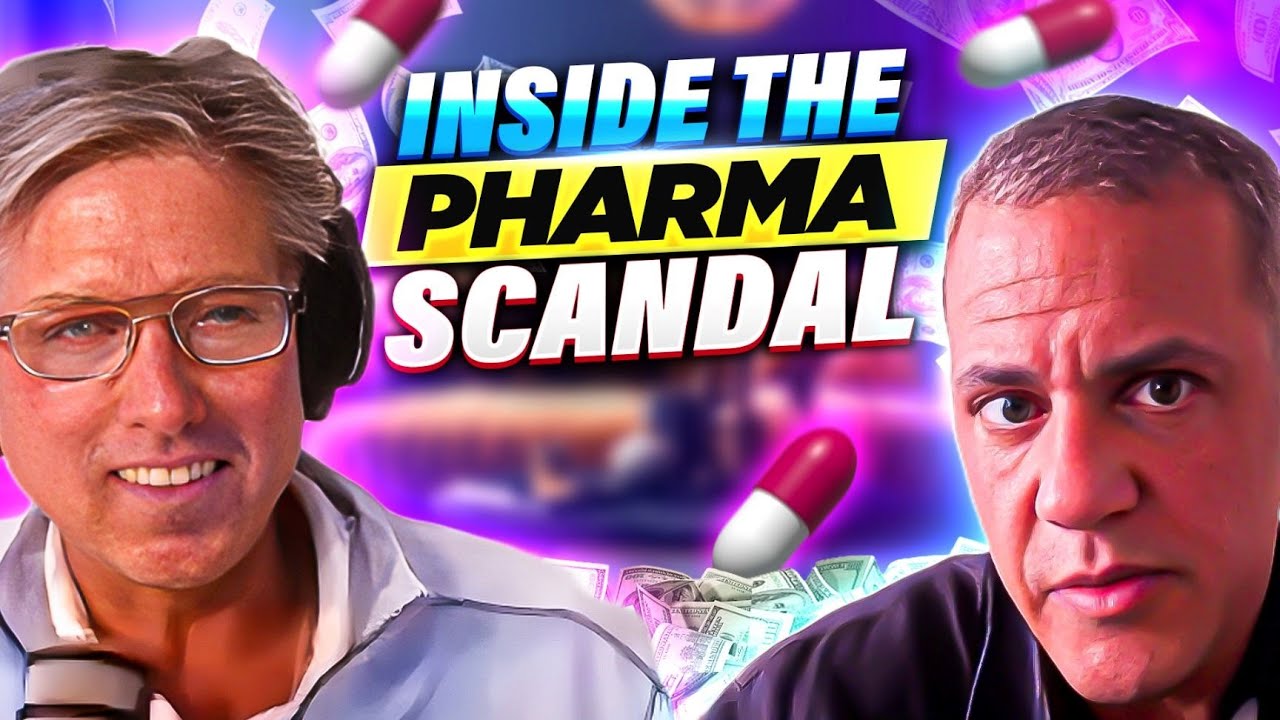
Alec Burlakoff shares a first-hand white collar crime story and practical lessons for people navigating legal pressure, incarceration, or reentry.
Key Takeaways
- Alec Burlakoff explains what triggered the legal and personal crisis.
- The episode shows how accountability and structure shape outcomes in white collar crime.
- Listeners get practical second-chance lessons they can apply immediately.
Alec Burlakoff: From Guidance Counselor to $3 Billion Big Pharma Sales
“At this point in my life, I’m not looking for that kind of success anymore. I want peace and happiness. I want moderation. I want to make a living—I don’t need to be successful like that.”
Alec Burlakoff’s story is the kind they make movies about. Literally. Netflix’s “Pain Hustlers” with Emily Blunt and Chris Evans is based on what happened at Insys Pharmaceuticals. But Alec sat down with me to tell the real version—how a school guidance counselor ended up generating over $3 billion in pharmaceutical sales, and what happened when the federal government decided to make an example of the executives.
Growing Up in Sales DNA
Alec grew up with a dad and older brother who were both in the car business. His father started in printing, then moved the family to Florida and worked his way up from selling cars on a lot to General Manager. His brother followed the same path even faster.
“At the dinner table, the conversation was between my brother and my father,” Alec told me. “What deals were made, how the deals were closed, the logistics. I was just a listener, an observer.”
His brother had severe bipolar disorder and passed away in 2013. There was always yelling and screaming at home—his parents didn’t have a good marriage. But Alec’s takeaway was that the sales ability was in the family DNA, even if he initially rejected it.
A Bacterial Infection That Changed Everything
The summer before his senior year, Alec got incredibly sick. A rare bacterial infection called brucellosis—the first case diagnosed in his area in 20 years. For six to eight months, doctors couldn’t figure out what was wrong.
“The worst flu you ever had, but it never ends,” he described it. “Day after day, week after week, month after month. Sweats, chills, nausea, losing weight.”
His entire senior year was shot. He was on homebound, didn’t go to school at all. And the antibiotics made him feel worse before he got better. It took years to feel normal again.
“You learn at that age that you’re not invincible,” Alec said. “Something very terrible could happen. You could die very quickly. It shaped the way I thought. It was my first bout of mental illness—depression from being sick.”
From Guidance Counselor to Pharma Sales
Alec didn’t follow his dad and brother into sales. He got a master’s in child psychology and became a school guidance counselor. He thought the sales world sounded like hell.
But he took a job at an affluent private school in Florida, surrounded by people with crazy money. Parents in Bentley convertibles. The disparity started getting to him.
“The straw that broke the camel’s back was monitoring the carpool lane after school,” Alec recalled. “A guy smoking a cigar in a Bentley convertible. I asked him to put it out. He took another puff, blew it in my face, and said ‘Petty rules from petty people.’”
One of the parents at the school saw something in Alec and helped him get an interview at Eli Lilly. He got the job and immediately became Rookie of the Year.
Building the Insys Machine
After bouncing through several pharmaceutical companies, Alec took five years off from pharma to run sleep laboratories. Then came the call that changed everything. Matt Napolitano from Insys Pharmaceuticals said they were launching a new drug and weren’t happy with their current VP.
The company was struggling. Owner John Kapoor had been in several different pharmaceutical ventures, but this one wasn’t performing. Sales were horrible. They were going to go under.
“I asked the most arrogant, cocky questions a man could ever ask,” Alec said. “And they said ‘It’s your show. Whatever you want to do.’”
Alec built the sales force his way. He hired people without college degrees if they could sell. He hired an ex-felon who had a felony for selling. He even hired a stripper he met at a club who could look the part and make it through interviews.
“Ninety percent of pharmaceutical salespeople are not good salespeople,” Alec said. “I came to the conclusion within a couple months at Eli Lilly that this isn’t about helping patients and saving lives. Sales drive companies.”
The Speakers Bureau
The real money came from the speakers bureau. Alec and his team identified doctors who would prescribe the fentanyl spray in exchange for speaking fees. They used publicly available data to target physicians with high prescribing patterns.
“The doctors that clearly would have raised a red flag to the government are the doctors that raised a green flag to us,” Alec admitted. “Path of least resistance.”
They targeted primary care physicians making around $150,000 a year. If you could add another $200,000 in speaker fees, that was a life-changing amount. The targeting was extensive—looking for divorced doctors trying to hide money, introverts who wanted the camaraderie and bottle service.
“We found maybe twenty doctors in my book,” Alec said. “We uncovered every stone, went to every city, cities you’ve never heard of in the middle of nowhere.”
The Investigation Closes In
Alec felt it coming. An investigative reporter had written pieces about the company. He read about doctors getting in trouble when patients died. He knew this wasn’t normal.
“I kept trying to tell myself this comes with the territory,” he said. “Be a man. Don’t waver. Keep moving forward. I’m the leader.”
He got a civil attorney, then the attorney told him he was moving from “person of interest” to “subject” to “target.” Target means indicted. Indicted means cooked.
Alec was indicted in 2016. He didn’t go to prison until 2020—four years of living in limbo, knowing it was coming but not knowing when.
Four Weeks in Solitary
Alec reported to FCI Miami, a minimum security facility. But because of COVID quarantine protocols, he went straight to the SHU—solitary confinement.
“You think you’re going to the minimum and for four years people told you it’s not going to be that bad,” Alec said. “Then you’re like, oh, I’m going to the SHU.”
He spent four weeks going in, four weeks coming out. No air conditioning in Miami’s July heat. The window opened about an inch. They let him out maybe every two or three days for a twenty-minute shower.
“I couldn’t do push-ups,” he admitted. “I tried to run in place. My brain was so dulled up. I was losing my cognitive ability. People are in there for nine months—they come out looking different. Acting different. They are different.”
He tried to memorize his phone number to call his family. No matter how hard he tried, he couldn’t hold it in his head.
Coming Out the Other Side
Alec got out and did nine months in a halfway house, then three months on home confinement. He’s now working a phone sales job six days a week, making good money. He does some consulting with smaller companies and speaking engagements.
“I wanted to bury my head in the sand like the other six executives,” he said. “But there’s something still in me that says that’s not what you are.”
The Netflix movie “Pain Hustlers” is loosely based on the Insys story. Alec worked extensively with the author of the book it’s based on. He knows the movie will be dramatized, that some characters are composites, that it won’t be his exact story.
“The message I’m trying to get out there is the exact opposite of what that movie will portray,” he said. “But it’s a movie. Their job is to put people in seats.”
The Real Lesson
When I asked Alec for his biggest takeaway from everything he’s been through, his answer surprised me.
“It’s so counterproductive to spend your energy pleasing others,” he said. “Pleasing others is a character flaw—it’s an insinuation that you’re lacking something, and you’re trying to get it from somebody else. It’s got to come from within. You’ve got to fill yourself up.”
If you have that internal confidence, the decisions you make will be yours and yours alone. They won’t be influenced by anybody else trying to pull your strings.
You can reach Alec at [email protected] or check out his book “Selling: Hard Lessons Learned” on Amazon.
Key Takeaways
- Alec Burlakoff explains what triggered the legal and personal crisis.
- The episode shows how accountability and structure shape outcomes in white collar crime.
- Listeners get practical second-chance lessons they can apply immediately.


